What is Short Exempt (SE)?
If you're not in already, join the BigShort Discord — as one trader puts it, "this is the crown jewel of the whole thing!"
If you've already joined, you've no doubt seen traders talking about SE all over. Confused? Your answers to all things SE (short exempt) are below.
Why does SE Matter to BigShort Traders?
High SE readings very often come immediately before large volatile moves in a stock. For BigShort traders, SE is a way to identify which tickers to pay attention to in the coming day or days.
How do I find SE on BigShort?
You can find the Top 10 Short Exempt tickers in the Dashboard tab. There you'll find stocks that are likely to experience significant volatility. See below in Pink. Notice the top two tickers on the top 10 last night, INOD and HIMS (for SE trade walkthroughs).
The screenshots below were captured in BigShort's v1 interface; the setup and mechanics they show are unchanged in today's app.
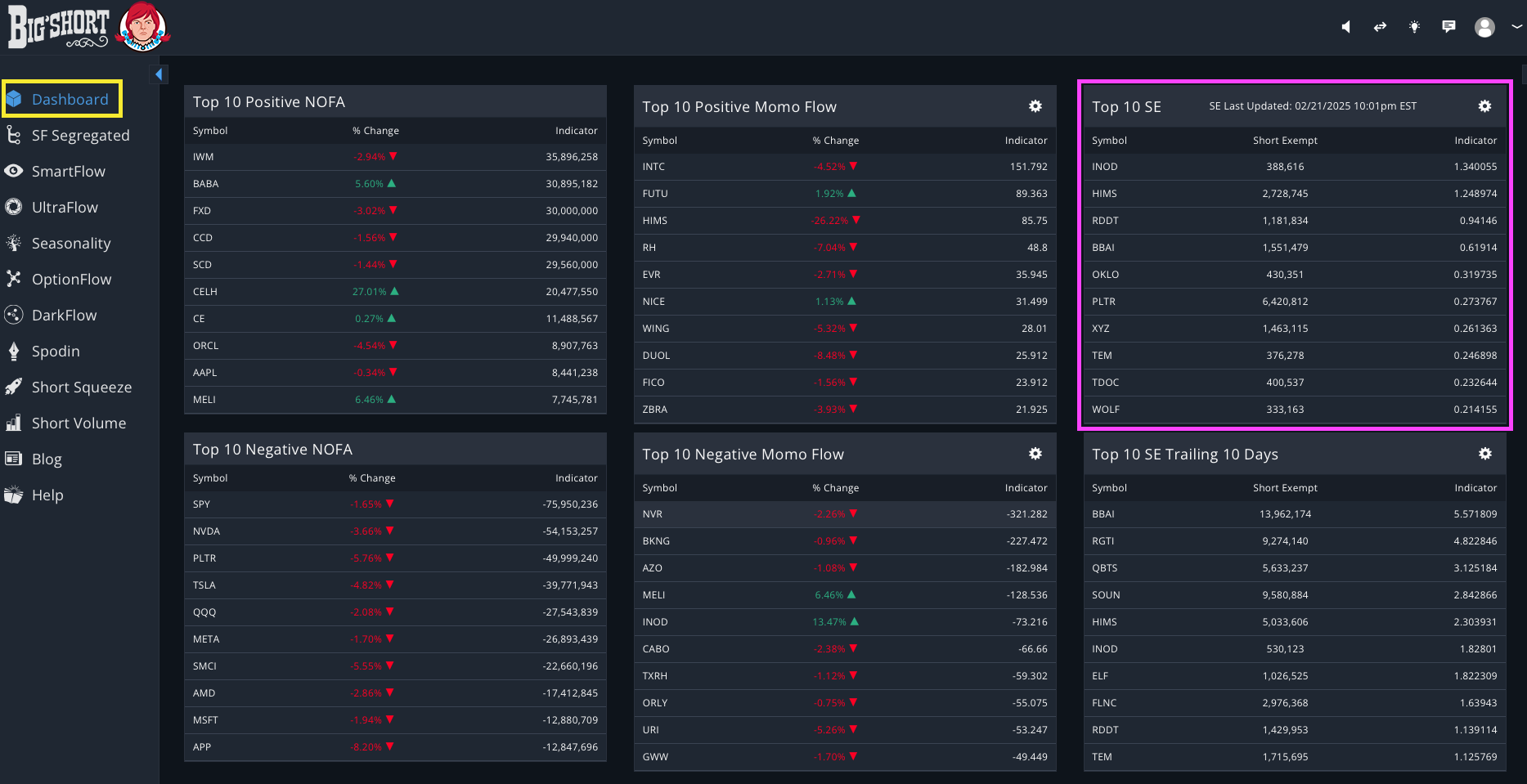
From the dashboard tab you can dig deeper in two ways:
- Click on the ticker you want to dig into on the top 10 list.
- Open the Short Volume tab (app.bigshort.com/shortvolume) and select the Short Exempt view to see the full history for a specific stock. The same tab also offers Long/Short Volume, Real Volume, MSC (Inverse) and MASC views, with history back to 2010 — useful for judging whether today's SE reading is unusual for that ticker.
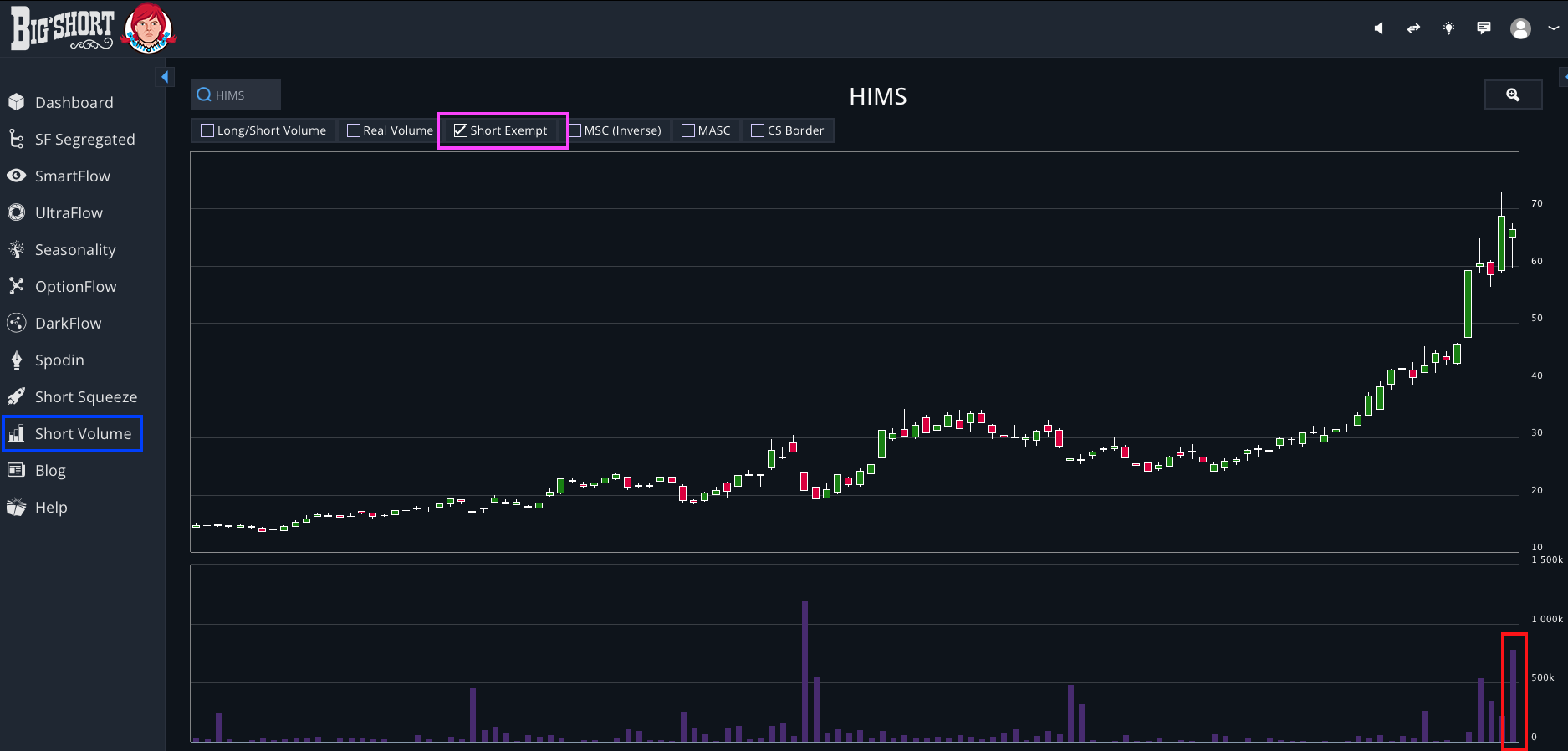
A large SE bar on the bottom (red box, above) is a sign of likely coming volatility (something you can trade profitably).
The next day, you trade using the BigFour BigShort indicators as normal.
What Is Short Exempt?
For those curious, here's a bit about what's happening under the hood with SE. Short exempt is a special short-selling designation that sidesteps certain trading restrictions, particularly the short sale restriction (SSR).
Why Does Short Exempt Lead to Volatility?
Short exempt orders create volatility because they sidestep the mechanics that normally slow shorting down. Under the SSR, traders can normally only short on an uptick — when the stock trades above the last sale price — but a short exempt order bypasses that rule entirely. Most short exempt orders come from market makers who are required to maintain liquidity, rather than from some blanket exemption for all shorts, so a jump in SE activity is often a sign that market makers are out of position and the stock needs to reposition. And because seeing short exempt in the order flow can mean a large participant is shorting without the usual SSR constraints, it can shift the pace of selling in ways worth watching on the tape.
Pro Tips
Watch for unusual shorting activity: short exempt orders can move a stock's price aggressively during SSR periods. And don't trade SE alone — corroborate it with other BigShort indicators, like Net Options Flow, Dark Pools, and MomoFlow, to build confidence in the direction and duration of the trade. Enter when a confluence of signals agree.